Designing Your Funeral Home Website: Making Your Physical Space Digital
Beyond the Virtual Tour: Crafting Digital Immersion into Your Funeral Home Website
The modern searcher, whether they are navigating a time of loss or simply researching options, approaches your website with a level of scrutiny and emotional sensitivity that demands perfection. For years, the primary function of a funeral home website was to provide basic contact information and service listings. Today, however, your website must function as an extension of your physical space—a digital reception area that guides, comforts, and ultimately, builds trust. A simple gallery of photos is no longer enough; your site needs to create an immersive, reliable, and deeply professional digital experience.
To start improving your site today, conduct a "first impression audit." Pretend you are a grieving family member who has just typed your web address into a stressed-out phone. Within the first 15 seconds, what emotional tone does the website convey? Does it feel warm, competent, and calm, or does it feel cold, overly corporate, or overwhelming? The immediate answer dictates your most critical design changes. The goal of sophisticated funeral home web design is not merely to look beautiful; it is to reduce anxiety through thoughtful, predictable, and aesthetically comforting digital architecture.
Showcasing Ambiance: Translating Physical Comfort to Digital Screens
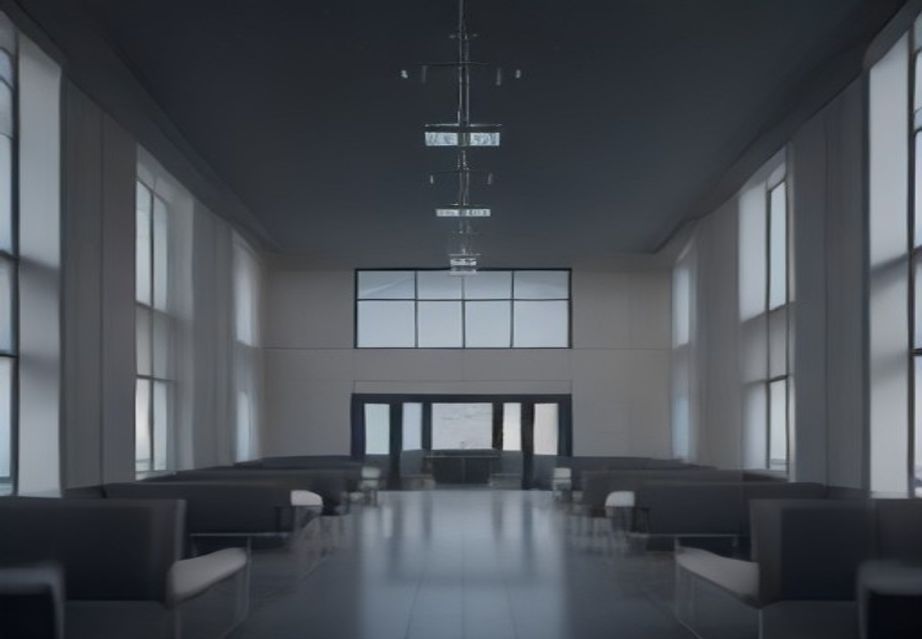
The ambiance of your chapel, the quiet dignity of your visitation rooms, and the warmth of your reception area are tangible elements that contribute significantly to the comfort of your clients. These feelings cannot be captured in a single photo; they must be woven into the user experience.
The Architecture of Trust: Using Visual Hierarchy
When designing your site, think of the physical flow of your chapel and replicate that emotional flow online. If the entrance area is designed to feel welcoming and grounding, the website's homepage should immediately reflect that feeling. Use high-quality, professionally styled photography that doesn't just show what the room is, but how it feels. Instead of a single, wide shot of the chapel, consider a series of micro-galleries or interactive sections that focus on specific architectural details—the quality of the woodwork, the lighting fixtures, the natural materials used.
For example, if your facility boasts a beautiful stained-glass window, don't just link to a picture of it. Dedicate a section with a subtle animation or a carousel that allows the user to "view" the window in different times of day (morning light, afternoon glow), giving them a richer, more dimensional understanding of the space. This level of detail signals meticulous care, which translates directly into perceived quality of service.
Implementing Contextual Photography
A common mistake is using stock photography or highly posed, unnatural photos. Instead, integrate "contextual photography"—images that show the space in use, but in a respectful, non-distracting manner. This might mean showing a tastefully arranged floral tribute in the visitation room, or a family gathered in a moment of quiet reflection (with appropriate permissions, of course). These images ground the site in reality, making the physical space feel alive and capable of hosting meaningful moments.
A great step-by-step tactic is to map your physical facility onto your website's navigation. If a family member needs to know where to park, where the reception area is, and what the chapel looks like, create three distinct, visually linked pages that mirror those physical zones. This predictability reduces cognitive load for the visitor, which is invaluable during a time of stress.
Designing for Empathy: The User Journey of Grief and Remembrance
A successful funeral home website must be designed with empathy as its core principle. The user journey is rarely linear; it is often fraught with emotional peaks and valleys. Your web design must anticipate these shifts.
Prioritizing Clarity Over Complexity
When someone is grieving, their ability to process complex information is diminished. Your website must be ruthlessly simple. This means reducing navigation menus to essential categories (e.g., Services, Memorials, Location, Contact) and ensuring that critical actions—such as finding service hours or requesting a consultation—are visible above the fold on every single page.
Consider the emotional state of the user. If they land on the site in the middle of the night, they are not looking for detailed cost breakdowns; they are looking for immediate, comforting reassurance and clear next steps. Your design should guide them to a single, prominent "Need Immediate Help?" button that links to a staffed, visible phone number, rather than burying the number in a footer.
Structuring the Memorialization Experience
The website is the primary digital portal for the process of memorialization. It must accommodate the full spectrum of needs, from simple service information to complex legacy planning. This is where advanced web design moves beyond mere brochure-ware.
Instead of simply listing "Online Memorials," create an interactive module. This module could guide the user through the process: Tell Us About the Person (gathering stories, photos, life milestones) $\rightarrow$ Choose a Tribute Format (digital guest book, video montage, e-book) $\rightarrow$ Publish. This interactive, step-by-step approach demystifies the memorialization process, making it feel manageable and thoughtful.
Building Digital Trust: Features that Signal Professionalism
Trust in the funeral industry is built on competence, transparency, and consistency. Your website is your most powerful tool for demonstrating all three.
Integrating Service Transparency
One of the most challenging topics for many families is the financial aspect of services. A professional website does not shy away from this; it manages it with dignity and clarity. Instead of simply linking to a "Pricing" page, create a "Understanding Your Options" section. This page should use educational, easy-to-read infographics to explain the difference between cremation and burial, or the components of a viewing versus a service.
This proactive approach to transparency not only mitigates anxiety but also positions your firm as an educational resource and a trusted advisor, rather than just a vendor.
The Power of the Digital Obituary and Tribute
The online obituary has evolved into a central hub of memory. Your web design must support this evolution. It should be more than a static announcement; it should be a dynamic hub that links to:
- Service Details: Time, date, and physical location.
- Guest Book: A dedicated, moderated space for condolences and shared memories.
- Life Stories: Dedicated sections for family members to contribute written memories or photos.
- Legacy Keepsakes: Integration points for online memorialization tools, such as those offered by services like [https://justlivingmemories.com/].
By consolidating all these elements into one beautifully designed, user-friendly portal, you demonstrate that you are managing the entire lifecycle of remembrance, both physically and digitally.
Optimizing for Connection: Technical and SEO Considerations
Even the most beautiful website fails if people cannot find it or if it is difficult to use on a mobile device. Technical excellence is not optional; it is foundational to modern funeral home web design.
Mobile-First Design: The Crucial Necessity
Statistics show that a significant portion of initial searches for services are conducted on mobile phones. If your website requires pinching, zooming, or horizontal scrolling on a smartphone, you are losing potential clients and damaging your credibility instantly. Every element—from the menu dropdowns to the photo galleries—must be optimized for the small screen.
A concrete action item: Test your site using Google’s Mobile-Friendly Test tool. Pay special attention to the call-to-action buttons. On mobile, these buttons must be large, finger-friendly, and instantly clickable.
Search Engine Optimization (SEO) for Compassion
SEO for the funeral industry requires a careful balance. You must optimize for the keywords people use when they are in distress, which often involves emotional or vague search terms, not just transactional ones.
Instead of only targeting "funeral home near me," you should also create optimized content around topics like "planning for end-of-life care," "what to expect during a viewing," or "local traditions for memorial services." These educational articles capture users who are in the planning stage, allowing you to build a relationship and establish expertise long before a crisis occurs.
The Role of the Digital Presence in Long-Term Planning
Finally, remember that your website's purpose extends far beyond managing immediate crises. It is a vital tool for pre-need planning. By creating dedicated, authoritative sections on estate planning, pre-need arrangements, and the emotional benefits of early planning, you shift the conversation from reacting to loss to proactively celebrating life.
A thoughtfully designed website can guide the user through the complex, often emotionally draining process of making these decisions. It serves as a steady, reliable digital guide, mirroring the steady, reliable care you provide in person. By mastering the art of digital immersion, you transform your website from a simple brochure into a powerful, comforting, and authoritative extension of your entire physical operation.
If you are ready to elevate your physical presence into an equally sophisticated digital experience, speak with the experts at Funeral Web Agency.
Ready to turn searches into booked jobs?
Funeral Web Agency — expert guides and resources.